A Historic Moment for European Conservation
In March 2023, the Albanian government did something that no other European country had done before: it created a national park designed specifically to protect a free-flowing wild river system from source to sea. The Vjosa Wild River National Park covers the entire 270-kilometer course of the Vjosa, from the Greek border down to the Adriatic, plus several major tributaries including the Bence, Drinos, Kardhiq, Shushica, and Sutiska.
This was the result of more than a decade of campaigning by Albanian environmental groups, international conservationists, kayakers, and rafters. Hydroelectric dams had been proposed along the Vjosa as recently as 2019; the national park designation effectively ends that threat forever. When you raft the Vjosa today, you are paddling through one of the most legally protected river ecosystems on the European continent.
What Makes the Vjosa Worth Protecting
Almost every large river in Europe has been dammed, channelized, or otherwise modified by humans. The Vjosa, almost uniquely, has not. It still floods in spring. It still moves gravel and sand naturally. It still meanders across wide floodplains and carves new channels each year. As a result, it supports an extraordinary diversity of life — at least 1,100 species of plants and animals have been documented in the Vjosa basin, including 13 globally endangered species.
Among the wildlife: Egyptian vultures, Eurasian otters, Balkan lynx (in the upper tributaries), the endangered European eel, and dozens of fish species found almost nowhere else. The river ecosystem is genuinely intact — not a recreated nature reserve, but a wild system that has been working continuously for thousands of years.
Rafting in the National Park
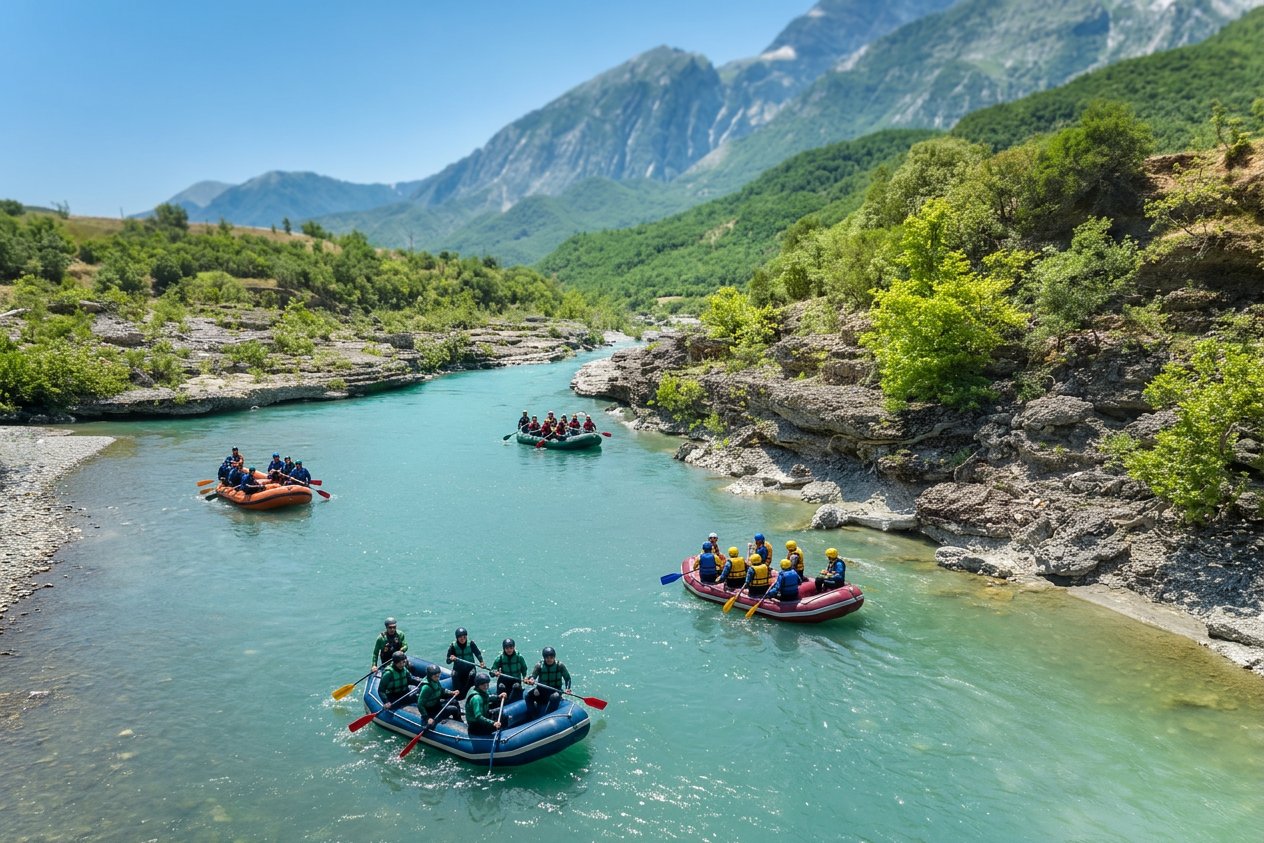
Commercial rafting is explicitly permitted in the park, and is in fact one of the activities the park's management considers low-impact and beneficial for sustainable local economies. Licensed operators like us follow specific rules: we do not introduce any wildlife (live bait, animals from other regions), we carry out all rubbish, we do not camp in core protected zones, and we limit group sizes on the most sensitive sections.
For visitors, the experience is exactly the same as any Vjosa rafting trip — there are no special fees or permits required for guests. The protection is on the river infrastructure side, not on tourist access. See our full Vjosa guide for everything else.
How to Visit Responsibly
The best way to support the park is simple: choose a licensed local operator, do not bring single-use plastics, do not feed wildlife, and stay on marked paths during land-based visits. Spend money in Permet and the surrounding villages — every euro spent in the local economy makes the case for keeping the river protected. If you bring nothing from the river but photos and memories, you are doing it right.
Frequently Asked Questions
When was the Vjosa Wild River National Park created?
The Vjosa Wild River National Park was officially established in March 2023 by the Albanian government, becoming the first national park in Europe dedicated to protecting an entire wild river ecosystem from source to delta.
Is rafting allowed in Vjosa National Park?
Yes. Rafting is a permitted, regulated activity inside the park. Licensed operators must follow specific environmental rules — no off-river camping in protected zones, no littering, no introduced wildlife — but commercial rafting is encouraged as a low-impact use of the river.
How big is the Vjosa National Park?
The park covers around 12,727 hectares along the entire 270-kilometer length of the Vjosa River from the Greek border to the Adriatic Sea, plus several major tributaries. It is one of the largest river-based national parks in Europe.
Experience Europe's First Wild River Park
Book Your Vjosa Park TripRead more: Vjosa Guide, National Parks, Eco Tourism.