The short answer is yes — and frankly, a lot of it, on some of the most underrated rivers in Europe. Here is what is actually on offer, who runs it, and why we think Albania has quietly become one of the best whitewater destinations on the continent.
Book a Whitewater TripYes, Albania has commercial whitewater rafting. Two rivers are run commercially: the Vjosa, which has the longest season and most varied difficulty, and the Osumi, which has the most dramatic canyon scenery. Both are in southern Albania, both are open to first-timers on guided trips, and both run between Class II and Class IV depending on the section and the season. The standard half-day commercial trip costs €40 per person and includes everything you need.
That is the headline. The rest of this article is the version where I explain what those words actually mean and which option is right for you.
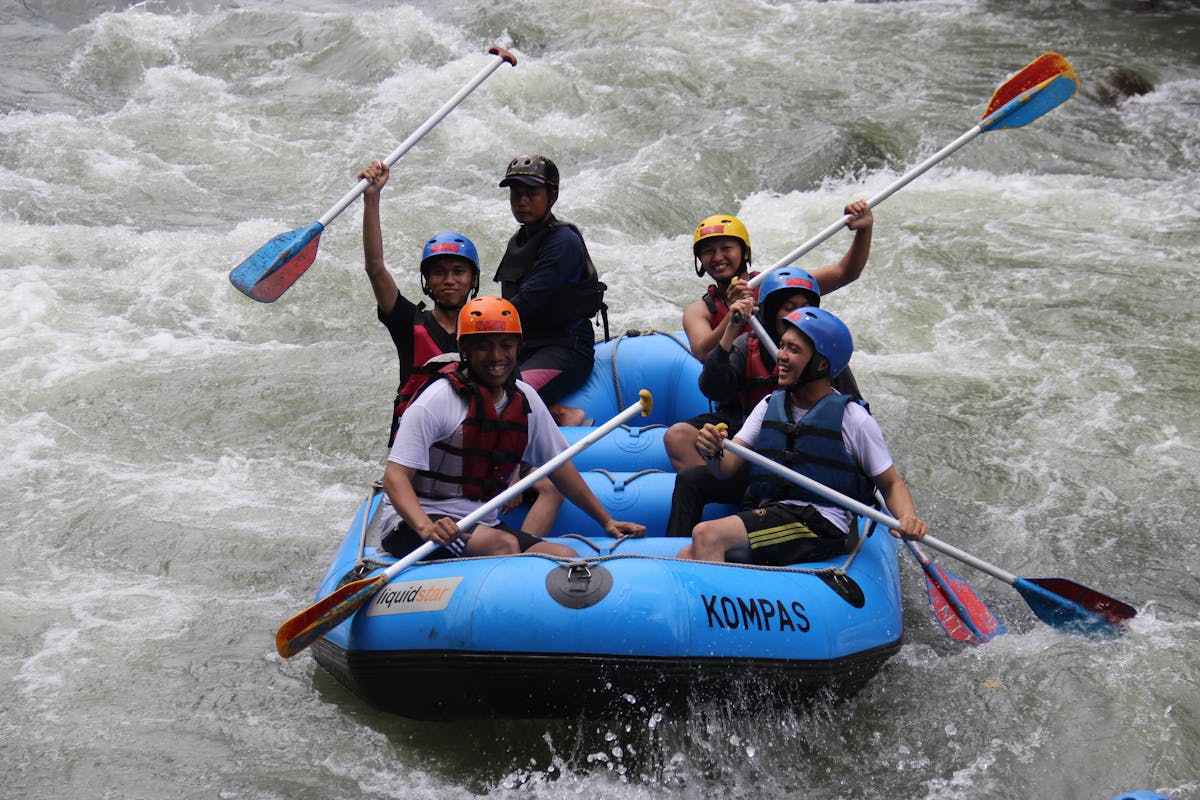
Most people are surprised. They picture Albania as a Mediterranean country with beaches and ancient cities, which it is — but they forget that the interior is dominated by some of the steepest, wildest mountains in the Balkans. The Pindus, Gramoz, and Albanian Alps all sit between 2,000 and 2,700 meters. When the snow on those mountains melts in spring, all of that water has to come down somewhere, and the rivers that drain them — the Vjosa, the Osumi, the Drin — turn into legitimate whitewater for several months a year.
This is not a marketing claim. Albanian whitewater has been recognized internationally for years. The Vjosa was named one of the 15 best rafting rivers in Europe by Corriere della Sera. The Osumi Canyon has been featured in multiple European adventure magazines. The International Rafting Federation held its 2023 world championship qualifying rounds partially in Albania. Whatever else is true about the country, the rivers are real and the whitewater is real.
Almost all commercial whitewater rafting in Albania happens on one of two rivers. They are about three hours' drive from each other and they are genuinely different experiences.
This is the headline river. The Vjosa is 270 kilometers long, flows from the Pindus Mountains in Greece to the Adriatic, and — uniquely in Europe — has no dams along its entire length. In 2023 it became the first Wild River National Park in Europe.
For rafters, the Vjosa offers more variety than any other river in the country. The Permet section runs at Class I-II and is fine for families. The Kelcyre Gorge — the most photographed stretch — sits at Class II-III. The Tepelene section can run Class III-IV in spring when the snowmelt is strongest. The season is long (late March to early November) and the water is generally reliable. If you only have time to raft one Albanian river, this is the one we recommend, and our main Vjosa page has every detail. We also have a deeper editorial guide at vjosa river guide for the curious.
The Osumi is shorter and more dramatic. The commercial rafting section runs about 13 kilometers through a limestone canyon that the river has been carving for over three million years. The walls reach 80 meters above the water. The rapids hit Class II-III in spring and become gentler through the summer. We have written about the experience in detail in our Osumi rafting experience article, and our main page is Osumi rafting.
The Osumi has a shorter season — May is the peak whitewater month, and by August the water is too low for serious rafting (we shift to tubing on the Osumi in late summer instead). But for canyon scenery in spring, nothing else in Albania comes close.
For completeness: there is also limited commercial rafting on the Bistrica near Saranda, but it is essentially a calm float trip and not really "whitewater." The Black Drin in northern Albania has been rafted experimentally by some operators but does not have a stable commercial offering. The Shkumbin and Devoll have whitewater sections but no commercial trips. So in practical terms, "whitewater rafting in Albania" means the Vjosa and the Osumi, and we operate on both.
This is the question we get more than any other from first-timers, and the honest answer is: it depends on which section, which month, and which water year.
For most guests, the experience is at Class II-III, which is the sweet spot of commercial whitewater. Class II is wave trains and small drops — exciting but very forgiving. Class III is bigger waves, faster current, and rapids that require the team to actually paddle in coordination. You will feel the river working. You might get a bit of adrenaline. But the rapids are not dangerous, the rafts are virtually unsinkable, and the guides know exactly what they are doing.
If you want a more challenging experience, the Tepelene section of the Vjosa runs Class III-IV in April and May. This is harder. It is faster, the waves are bigger, and you need to listen to your guide carefully. Even Class IV in this context is not "extreme" — international rafting goes up to Class V and beyond — but it is genuine whitewater that gives even experienced paddlers a workout.
What we do not offer: Class V or above. Those grades are for expert paddlers in kayaks, not commercial groups in inflatable rafts.
Whitewater rafting in Albania runs from late March to early November. We have written a separate dedicated article on this — the best time to go rafting in Albania — but here is the short version.
March and April: cold water, big flows, smaller crowds. Wetsuits mandatory. This is when serious whitewater enthusiasts come.
May: our favorite month. The water is still high from snowmelt but the air is warm. Wildflowers in the canyons. Best month if you want strong rapids in comfortable weather.
June through August: peak tourist season. Water levels drop, rapids become more playful than punchy. Best for families, beginners, and people who want sunshine and swimming stops.
September and October: quiet, beautiful, cooler. Light is golden. Crowds are gone. Photographers' season.
Albania is part of a broader Balkan whitewater belt that also includes Slovenia (the Soca), Bosnia (the Tara, the Vrbas, the Una), Montenegro (the Tara again on a different stretch), and Macedonia. All of these have legitimate whitewater. So why would you choose Albania?
Three reasons, honestly. First, price: a half-day rafting trip in Slovenia or Italy costs €60-80; the same trip in Albania costs €40. Read our breakdown at our pricing page or cost of rafting in Albania for a deeper look at why. Second, crowds: the Soca in July is packed with German tour buses; the Vjosa in July still feels semi-empty. Third, the Vjosa itself is genuinely unique. There is no other large wild river left in Europe. If you have rafted in Slovenia and want something different, this is the something different.
None of this is meant as a knock on other destinations. The Soca and the Tara are incredible rivers. But if you are choosing where to raft in Europe and you have not yet been to Albania, you should at least know it is an option.
There are several licensed commercial operators in Albania, most of them based in Permet (for the Vjosa) or Berat (for the Osumi). We are one of them. We have been running trips since 2017, our guides are certified by the International Rafting Federation, and we operate on both rivers. If you want the full company background, our about page has it.
Whichever operator you choose, look for these things: a license to operate (Albania regulates rafting and not every "guide" is licensed), international rafting certification for the guides, modern self-bailing rafts (not the old open kind), and clear safety briefings. If a company cannot show you those, walk away.
Yes, Albania has whitewater. The two main rivers are the Vjosa (long season, varied difficulty, our recommendation for first-timers) and the Osumi (spectacular canyon, shorter season, best in May). Trips cost €40 per person for the standard half-day. Season is late March to early November. No experience required. Bring swimwear, water shoes, and a sense of humor about getting wet. Everything else we provide.
If you want to actually book a trip, send us a message on WhatsApp or visit raftingalbania.al for the full menu.
Yes. Albania has commercial whitewater rafting on the Vjosa River and the Osumi Canyon, both in the south of the country. The Vjosa runs from late March to October with Class I to IV sections; the Osumi has a shorter season but more dramatic canyon scenery. Both rivers are open to first-time rafters with a guided trip.
Most commercial trips run at Class II-III difficulty, which is challenging enough to feel like a real adventure but accessible to first-time rafters. Spring (April-May) is the most intense, with some sections climbing to Class IV. Summer water is gentler. No previous experience is required for guided trips.
The whitewater rafting season in Albania runs from late March to early November. The most powerful rapids are in April and May, fed by snowmelt from the mountains. June through September is the warmest and busiest period. October is quiet and beautiful but cooler.
Albania offers a comparable experience to better-known destinations like Slovenia (Soca River) or Bosnia (Tara River) but at significantly lower prices and with far fewer crowds. The Vjosa in particular is unique in Europe as the last large undammed wild river.
Read more: Top Rafting Destinations, Best Time to Raft, Cost of Rafting, Vjosa Guide.