It is one of the most common worries we hear, and the answer surprises people: no, you do not need to swim to go rafting. Here is why that is true, what actually keeps you safe, and the one thing that matters more than swimming ability.
Ask Us About Non-SwimmersNo — you do not need to know how to swim to go rafting on the kind of rivers most people visit. On Class II-III water like the Vjosa and the Osumi, every single person wears a certified life jacket, the guide controls the raft, and you stay inside the boat for almost the entire trip. Non-swimmers go rafting safely every day of the season.
The thing that genuinely keeps you safe in moving water is not your swimming stroke — it is the life jacket and the guide. A strong swimmer without a life jacket is in more danger than a non-swimmer wearing one. That single fact is the heart of this whole question.
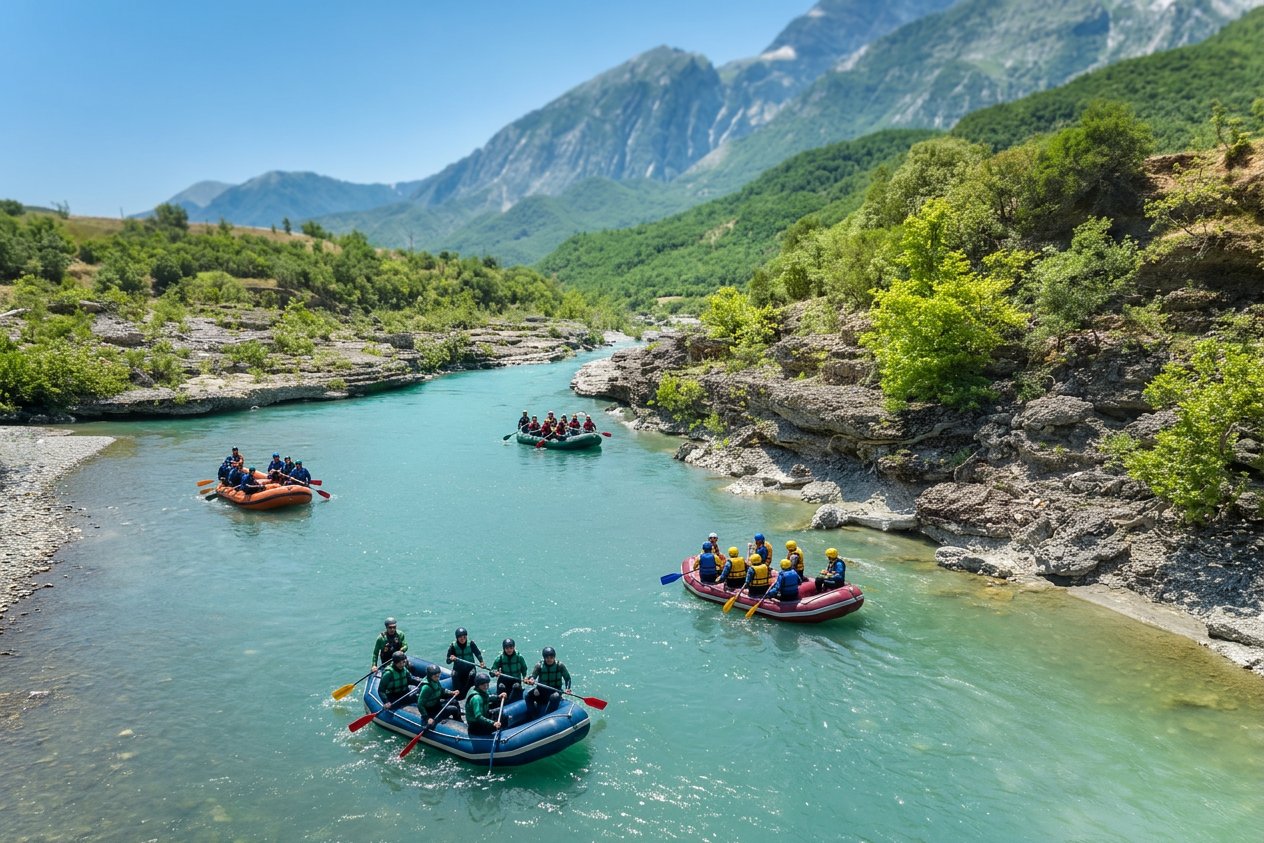
People assume rafting safety is about being able to swim to shore if something goes wrong. It is not. In whitewater, even Olympic swimmers do not "swim to shore" against the current — they float on their back, feet downstream, and let the life jacket and the rescue do the work. The technique we teach a non-swimmer is exactly the same technique we teach a swimmer.
Your life jacket is a whitewater-rated PFD designed to turn you face-up and hold you on the surface whether or not you can swim a stroke. So the skill that matters is not swimming — it is staying calm and following the simple floating position from the safety briefing. We can teach that to anyone in five minutes on dry land.
Let me describe it honestly, because knowing the worst case removes the fear. Falling out happens occasionally in a bigger rapid. If it happens to you:
At no point does swimming ability change this sequence. The jacket floats you, the calm pool slows you, the guide recovers you. This is exactly why we say rafting is not as dangerous as people think on Class II-III water.
If swimming is not the requirement, what is? Being reasonably comfortable in and around water. Not a strong swimmer — just someone who will not completely panic if their face gets wet or they end up in the water for a few seconds.
Mild nerves are totally fine and normal; nearly everyone relaxes after the first rapid. But a genuine, severe water phobia is the one thing a life jacket cannot solve, because panic stops you from following the floating position. If you have a real phobia of water, that is worth an honest conversation with us before you book — not swimming ability, but panic, is the real consideration.
This is the single most useful thing a non-swimmer can do: tell the guide before you launch. It is not embarrassing and it does not get you turned away. What it does is let the guide help you:
Guides have taken thousands of non-swimmers down these rivers. Telling them is routine, and it makes your trip both safer and more relaxed.
If you cannot swim and you want the gentlest possible introduction, the Osumi Canyon is my honest recommendation — calmer rapids, long peaceful stretches, and stunning canyon scenery. The Vjosa is also completely fine for non-swimmers at normal water levels.
And if rafting still feels like a big first step, river tubing on the calm sections is an even gentler way to get on the water — still with a life jacket, still guided, just slower. Plenty of people start there and graduate to rafting. Either way, take a look at our beginner rafting guide for what a first trip feels like.
You do not need to know how to swim to go rafting. The life jacket keeps you afloat, the guide keeps you safe, and the calm pools between rapids give everyone room to breathe. What matters is being reasonably at ease near water and being honest with your guide about your comfort level.
Thousands of non-swimmers have paddled the Vjosa and the Osumi and walked away grinning. If you are a non-swimmer wondering whether rafting is off-limits — it isn't. Message us, tell us your concern, and we will set you up for a safe, enjoyable first trip.
No, you do not need to know how to swim to go rafting on Class II-III rivers like the Vjosa or Osumi in Albania. Every participant wears a certified life jacket that keeps them afloat, and the guide manages the raft. Non-swimmers raft safely every day. You should, however, be reasonably comfortable being in and around water.
If you fall out, your life jacket immediately floats you to the surface and keeps you face-up. The safety briefing teaches you a simple floating position, and the guide recovers you within seconds on Class II-III water. Non-swimmers are kept afloat by the jacket exactly the same as swimmers.
Yes. Always tell your guide if you cannot swim or are nervous in water. It is not a problem and it does not stop you rafting, but the guide will give you the most secure seat in the raft, keep an extra eye on you, and brief you a little more carefully. Honesty makes the trip safer and more relaxed for you.
Mild nervousness is completely normal and most people relax after the first rapid. However, a genuine phobia that causes panic can make rafting harder, because panic is the one thing the life jacket cannot fix. If you have a severe water phobia, talk to the operator first or consider a gentler activity like river tubing on calm sections.
Read more: Rafting for Beginners, Is Rafting Dangerous?, River Tubing, Osumi Canyon.