This is the question we get asked most, and it deserves an honest answer rather than a marketing one. Yes, rafting carries some risk — every outdoor activity does. But guided rafting on the rivers we run is far safer than most people assume. Here is the full picture.
Ask a Safety QuestionGuided rafting on Class II-III rivers — the kind we run on the Vjosa and the Osumi — is a low-risk activity when it is done with a licensed operator, certified guides, and proper equipment. It is not risk-free, because nothing involving moving water is risk-free. But the actual rate of serious injury on guided beginner and intermediate trips is very low, and the most common "injuries" are sunburn and bruised shins.
The danger people imagine — being thrown into raging water and swept away — is real on Class V expedition rivers run by experts. It is not what happens on a commercial half-day trip designed for first-timers.
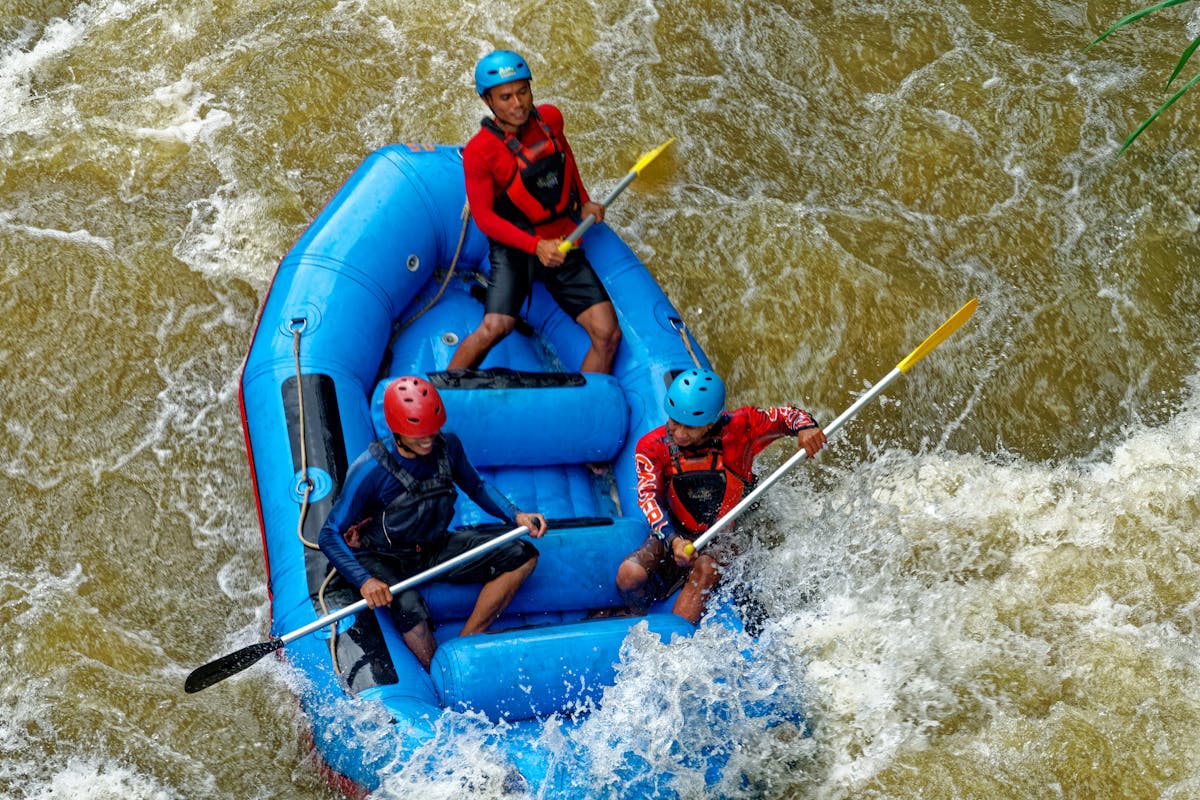
Let me be specific instead of vague, because "it depends" is a useless answer. On a guided Class II-III trip, here are the genuine risks, roughly in order of how often they happen:
Serious injuries — breaks, head trauma, near-drownings — are genuinely rare on guided commercial trips at this grade. They are strongly associated with two things: dangerously high water and unlicensed or careless operators. Both are avoidable, and avoiding them is most of what safety in rafting actually means.
The single biggest factor in whether rafting is dangerous is not the river — it is who is running the trip. A good operator turns a potentially risky environment into a safe, controlled experience. Here is what that looks like in practice:
This is exactly why we always tell people: the price difference between a €40 licensed trip and a €25 unlicensed one is the safety margin. If you understand what whitewater grades mean and you choose a licensed operator, you have removed the majority of the real risk.
The Vjosa and the Osumi are well suited to safe commercial rafting. Both have long sections of Class II-III water with calm pools between the rapids, which gives guides room to recover anyone who falls out and gives nervous paddlers time to breathe.
The Osumi Canyon is the gentler of the two and is the one we recommend most for families and the safety-conscious. The Vjosa is also very safe at normal water levels and is a longer, more varied run. Neither is an extreme river at the sections we use for the public — which is precisely why they are good places to raft for the first time. If you want something even calmer than rafting, river tubing on the Osumi is a gentle alternative.
On Class II-III water, yes. Every person wears a certified life jacket that is designed to keep them floating face-up even if they cannot swim — this is why you do not need to be a swimmer to go rafting. We regularly take children from around 8 years old and people who are not confident in water.
The key is matching the trip to the group. For kids and nervous first-timers we use the gentlest sections, brief them carefully, and the guide keeps an extra eye on the least confident person in the raft. Higher-grade whitewater is a different activity entirely and we simply do not run it with children or anxious beginners.
Here is the honest perspective from people who do this every day in season. The drive to the river is statistically the most dangerous part of your day. The rafting itself, done with a licensed operator at normal water, sits comfortably in the same low-risk bracket as activities like horse riding or skiing on a groomed slope — adventurous, occasionally bumpy, very rarely seriously harmful.
What you are really deciding when you ask "is rafting dangerous" is not whether to accept some wild gamble. It is whether to choose a reputable operator over a cheap one, and whether to actually listen to the safety briefing. Do those two things and you have made rafting about as safe as an adventure sport gets.
Rafting is not dangerous in the way films and viral videos suggest — not at the grade and with the kind of operator that a normal visitor to Albania will use. It carries the modest, manageable risk of any outdoor adventure, and almost all of that risk is controlled by the guide, the equipment, and the decision not to run the river when it is too high.
Choose a licensed operator, wear the gear, follow the briefing, and the odds are overwhelmingly that your only souvenirs will be wet clothes and a big grin. If you have a specific health concern or worry, message us before you book and we will give you a straight answer.
Commercial rafting on Class II-III rivers is considered a low-risk activity when run by a licensed operator with certified guides. The rivers used for beginner and intermediate trips in Albania, the Vjosa and Osumi, are not dangerous when you wear the provided safety gear and follow your guide. Serious injuries are very rare on guided trips.
The most common rafting incidents are minor: bumps, scrapes, sunburn, and occasionally a twisted ankle while getting in or out of the raft. Falling out of the raft happens occasionally but is rarely dangerous on Class II-III water because you wear a life jacket and helmet and the guide recovers you quickly. The biggest real risks are linked to high water levels and inexperienced operators, not the activity itself.
Certified guides keep rafting safe by reading the river, choosing safe lines, giving a thorough safety briefing, providing helmets and life jackets, scouting difficult rapids, and carrying rescue equipment. Reputable operators also check daily water levels and cancel or change routes when the river is unsafe.
On gentle Class II-III rivers, rafting is safe for children from around age 8 and for non-swimmers, because everyone wears a certified life jacket that keeps them afloat. The guide and the safety briefing account for less confident participants. Higher-grade whitewater is a different matter and is not run with children or nervous beginners.
Read more: Rafting for Beginners, Do You Need to Swim?, Whitewater Rafting Guide, FAQ.