You'll see rivers described as "Class III" or "Class V" everywhere, but what does that actually mean for you in the raft? Here's the whole scale in plain English — and where Albania's rivers fit.
Ask About a River's GradeWhitewater is graded on the International Scale of River Difficulty, from Class I to Class VI. Class I is easy moving water; Class II-III is the beginner-to-intermediate sweet spot used for most commercial trips; Class IV is advanced; Class V is expert-only; and Class VI is the extreme limit, rarely run by anyone. If you're booking a normal rafting day in Albania, you're almost certainly looking at Class II-III.
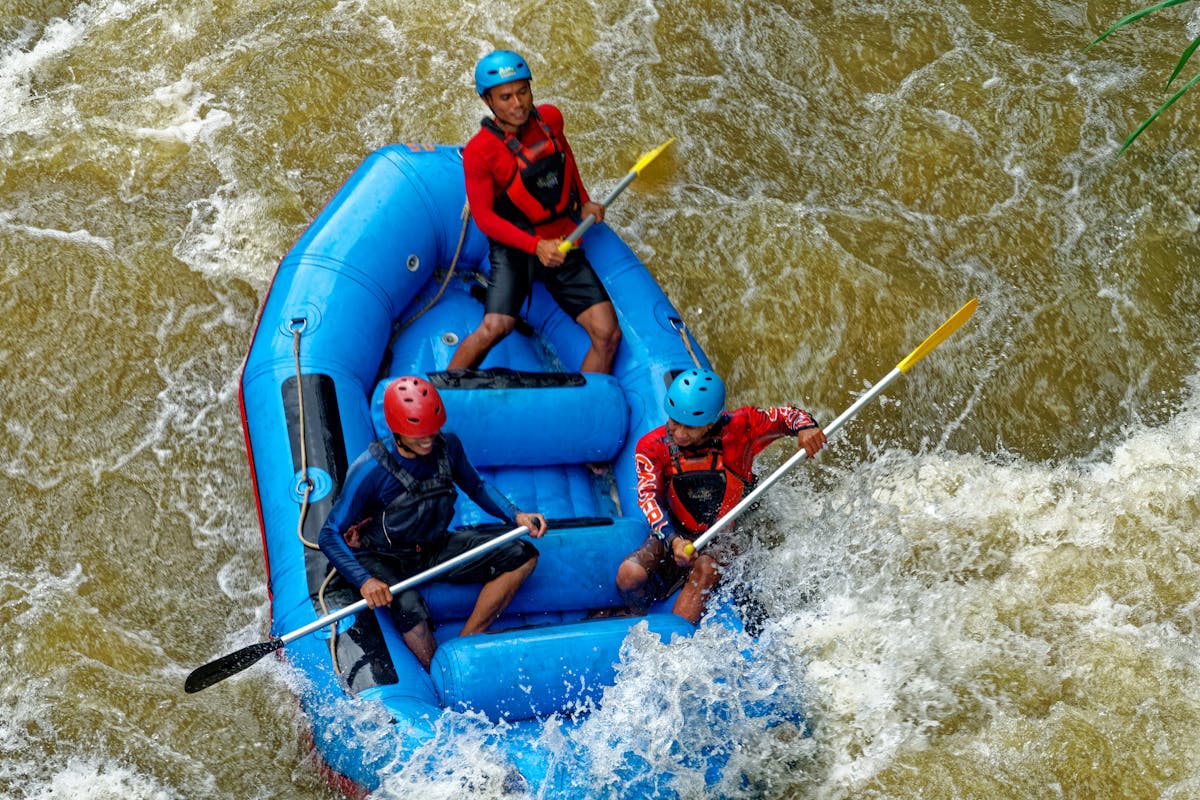
Here's what each grade actually feels like, without the jargon.
For the vast majority of people — including anyone who has never rafted — the answer is Class II-III. It's the grade designed for commercial trips: enough waves and drops to get your heart going, with calm pools between the action and a guide doing the technical work. You get the adrenaline without the real danger.
Class IV and above is a different world that requires experience, fitness, and the right conditions. It's not something you'd casually book on holiday. If you're weighing up whether you're ready for rafting at all, our guide on rafting for beginners covers exactly what's required of you.
The rivers we run for the public sit firmly in the friendly part of the scale. Both the Vjosa and the Osumi Canyon are mostly Class II-III at the commercial sections — exciting, scenic, and safe for first-timers and families.
One thing worth knowing: water level changes the intensity. In spring, snowmelt raises the flow and the same rapids feel livelier; by late summer they mellow out. That's why the grade is a guide rather than a fixed promise, and why a good operator checks the river daily before running it.
The grade tells you how demanding the water is, not how dangerous your trip will be — those aren't the same thing. A Class III rapid with a certified guide, the right gear, and sensible water levels is far safer than a Class II run with a careless, unlicensed operator. The grade is only half the story; who's running the trip is the other half. We go into this in detail in our piece on whether rafting is dangerous.
The Class I-VI scale runs from a gentle float to the extreme limit of what's possible. Almost everyone rafts at Class II-III, which is where Albania's Vjosa and Osumi sit — real rapids, real fun, genuinely safe for beginners. You don't need to memorise the scale; you just need to know that the trips you'll be offered here are built for first-timers. Curious which river suits you? Just ask us.
Whitewater is graded on the International Scale of River Difficulty from Class I to Class VI. Class I is easy moving water with small waves, Class II-III is beginner to intermediate with fun rapids, Class IV is advanced, Class V is expert, and Class VI is considered extreme and rarely run. Most commercial rafting trips, including those in Albania, are Class II-III.
Class II and Class III rapids are ideal for beginners on a guided commercial trip. They provide real excitement with waves and small drops, but with calm sections in between and no serious danger when you follow a certified guide. This is the grade used for most first-time and family rafting.
The main rafting rivers in Albania, the Vjosa and the Osumi Canyon, are mostly Class II-III at the sections used for commercial trips. This makes them suitable for beginners and families while still offering genuine rapids. Water levels in spring can raise the intensity slightly.
Class VI is the hardest grade and is considered the limit of navigability — extremely dangerous, unpredictable, and rarely attempted even by experts. Class V is the hardest grade run on a regular basis, and only by experienced paddlers. Neither is used for normal commercial rafting trips.